
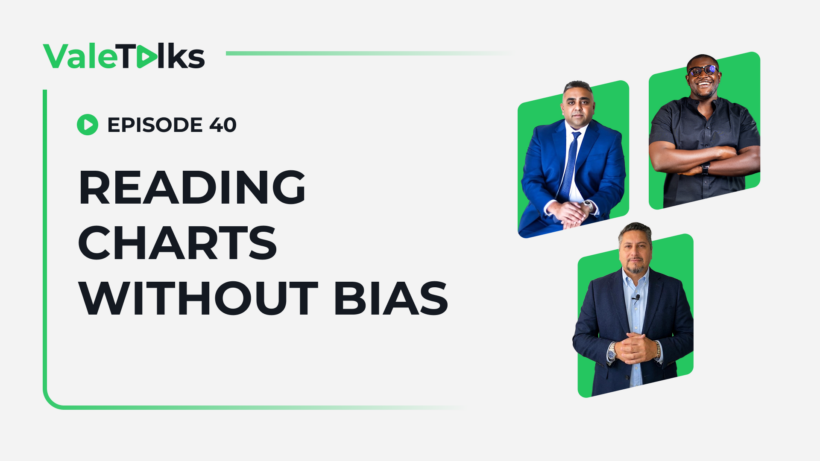
In Episode 40 of ValeTalks, host Rion Ifere is joined by Antonio Montiel and Manesh Patel to tackle one of the most honest conversations in trading: how confirmation bias quietly shapes analysis and leads traders to see what they want rather than what the chart is actually showing. Recognising this tendency is the first step. Building habits that correct for it is where the real work begins.
What you’ll learn in this episode:
- The most common biases that distort chart reading and trade decisions
- How to separate what the chart is showing from what you hope it is showing
- Practical techniques to stay objective before entering a trade
- How to build a more disciplined, repeatable approach to analysis
Episode Breakdown
Common Biases That Distort Chart Reading
Confirmation bias is the most prevalent, but certainly not the only one. Anchoring bias causes traders to fixate on a price level long after the market has moved past it. Recency bias, on the other hand, makes the last trade disproportionately influence the next decision. Manesh Patel explains that these biases operate beneath conscious awareness. Consequently, analysis feels objective even when it is not.
What the Chart Is Actually Showing vs What You Hope It Is
Antonio Montiel presents a simple framework: remove the trade idea first, then ask what the chart shows without directional bias attached. Where is structure? Where has price been rejected? Only after answering those questions does the trade idea re-enter the process. Evidence first, conclusion second. That sequence is therefore what keeps analysis honest and repeatable.
Building Habits That Keep Your Analysis Clean
Objectivity is not a mindset. Rather, it is a process. Rion and the team outline the habits that support cleaner analysis: pre-session routines that separate preparation from execution, checklists that account for evidence against your bias, and review practices that surface recurring errors. Moreover, trading a rule-based plan removes the space in which bias operates most freely.
Through this episode, ValeTalks gives traders the self-awareness and structure to read the market as it is, not as they want it to be.
Trading involves risk. Past performance is not indicative of future results.